If you step onto a commercial job site or a residential build today, the blueprints driving the project look completely different than they did just ten years ago. Building codes have gotten stricter, engineering tolerances are tighter, and project deadlines are shorter than ever. Because of these rapid shifts, the way we create, review, and finalize technical drawings has had to evolve.
At McLine Studios, we’ve spent this transformative decade refining our architectural drafting services to keep pace with these exact industry demands. We know firsthand that turning a complex design concept into a flawless, field-ready construction document takes more than just software it takes serious technical expertise. The days of basic digital sketching are long gone. Today, builders and architects rely on data-rich, highly accurate technical drawings to get the job done right the first time. Modern construction simply doesn’t leave room for guesswork. Whether you are dealing with a custom home build or a massive commercial facility, you need absolute geometric accuracy and files that work seamlessly across every team involved.
Here is a closer look at how the last ten years of technological leaps, paired with hands-on expertise, have completely reshaped the way we approach drafting, planning, and execution.
The Real Shift in Modern Architectural CAD Drafting
A decade ago, a lot of digital drafting was treated like a simple electronic pencil. Draftsmen would essentially draw flat lines on a screen to replace the old manual drawing board. But those early files didn’t hold much actual data. They lacked uniform scaling, smart layering, and the deeper structural information needed to avoid clashes on the job site.
Today, architectural CAD drafting is a completely different beast. It is a multi-layered, highly technical discipline that acts as the backbone for the entire build. Instead of just drawing simple outlines, modern drafting focuses on building an intelligent digital master file. This file contains exact material specifications, spatial relationships, and vital structural data.
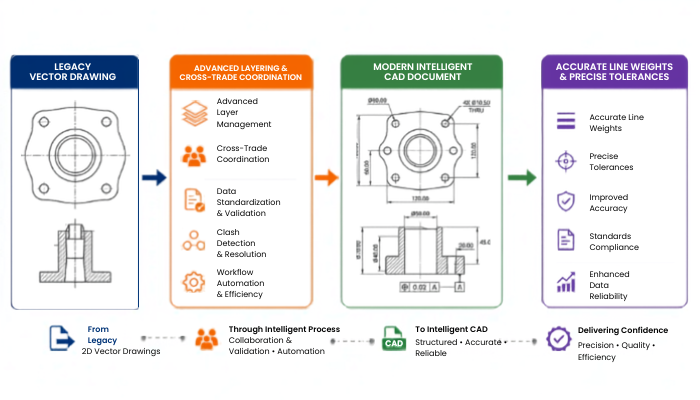
Because of this shift, professional CAD drafting services have become the ultimate problem-solvers. By mapping everything out perfectly in the digital space, construction firms can spot and fix geometric clashes long before a single shovel hits the dirt. When a technical draftsman manages the file, they organize wall assemblies, structural grids, and utility pathways into one unified environment. This means the architect, the structural engineer, and the mechanical contractor are all looking at the exact same data, on the exact same coordinate system.
At the same time, specialized AutoCAD drafting services have created a universal language for the industry. By sticking to strict rules for line weights, text blocks, and dimensioning, professional draftsmen make sure every single blueprint is crystal clear. This structured approach prevents expensive mistakes in the field, helps push plans through local permitting offices faster, and gives the construction crew a roadmap they can actually trust.
The Demand for Precision in Floor Plan Drafting Services
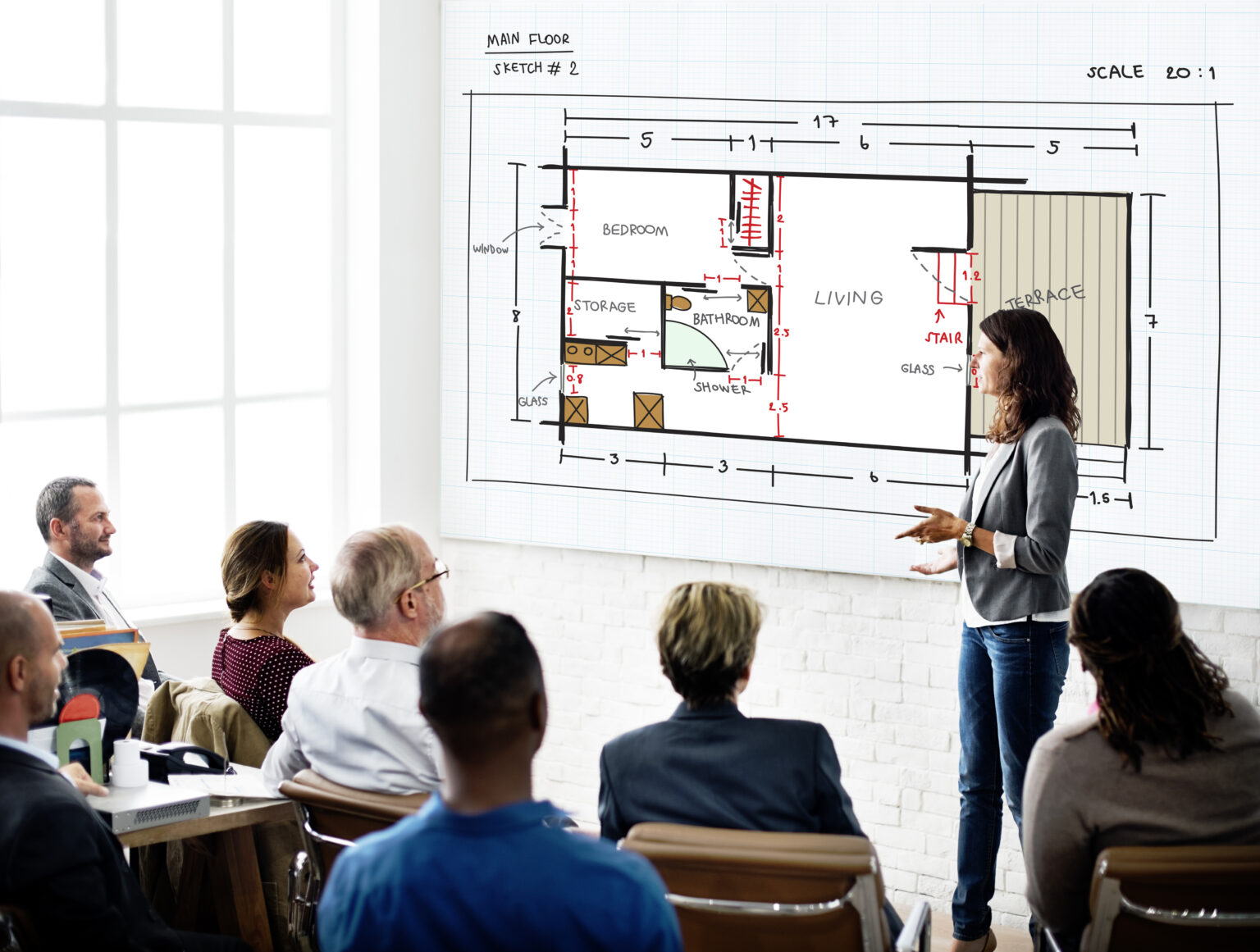
Whether you are building a sprawling industrial complex or a cozy single-family home, everything starts with the floor plan. Over the past ten years, floor plan drafting services have grown from basic spatial outlines into incredibly detailed architectural roadmaps. A modern floor plan doesn’t just show where the walls go; it has to balance the client’s design vision with strict engineering rules, local zoning laws, and life-safety codes.
This level of detail is especially critical when providing residential drafting services. Homebuilders and developers don’t just want a pretty layout they need a comprehensive drawing package that proves the house will actually stand up and function correctly. A truly professional residential layout handles the heavy lifting behind the scenes. It includes precise calculations for load-bearing walls, calculates the exact window-to-floor ratios needed to pass natural light codes, and maps out clear path-of-travel clearances for accessibility.
What Goes Into a Working Construction Blueprint?
To make sure there is zero confusion once construction starts, a professional drafting package breaks the data down across several highly specific sheets:
- Site and Foundation Plans: These show exactly where the building sits on the property, detailing setback boundaries, utility tie-ins, and the structural footings holding the whole thing up.
- Wall and Partition Details: This isn’t just lines on a page. It identifies the type of interior walls, the insulation ratings, exact wall thicknesses, and how the structure is anchored.
- Door and Window Schedules: These are highly detailed lists matching the layout, showing the exact rough opening sizes, header requirements, and energy performance ratings for every single window and door.
- Material Callouts: Systematic tags that tell the crew exactly what floor finishes, wall assemblies, and ceiling heights are required in each room.
Because modern drafting is so scalable, our team can handle everything from a single custom kitchen renovation to a massive multi-unit housing development. By keeping our files incredibly organized, we can make rapid design changes, pull accurate material counts, and ensure the floor plan lines up perfectly with the exterior elevations.
Rescuing Legacy Archives with CAD Conversion Services
If you manage older properties or handle renovations, you already know the headache of dealing with old, outdated building plans. Managing legacy documentation is one of the toughest operational challenges out there. Over the last decade, CAD conversion services have stepped in as the ultimate tool for rescuing and upgrading historical building records.
Let’s face it: old paper blueprints, faded linens, and scanned PDFs are a liability. They tear, they fade, and worse, you can’t edit them. If you want to integrate an older building into a modern facility management system, those old files are virtually useless as they are.
This is where highly accurate PDF to CAD conversion comes into play. A lot of people assume you can just run an old blueprint through an automated software scanner, but that almost never works. Automatic tracking software guesses where lines should go. It misinterprets text, blurs intersecting lines together, and distorts the curves.
Real, professional conversion requires a human touch. A skilled technical draftsman essentially uses the old document as a visual guide to reconstruct the drawing from scratch in a digital environment.
During a proper PDF to DWG conversion, a draftsman manually verifies every single structural line, wall boundary, and text note. They fix the scale distortions that happen when paper shrinks over the decades. They place every element onto the correct, standardized digital layer. By converting these static images into native, the international standard for the construction industry, we give property owners a living, breathing document.
Why Manual Conversion Beats Automated Scans
| The Challenge | Scanned PDF / Basic Image | True Layered DWG File |
| Zooming In | Lines blur and pixelate, making details impossible to read. | Vectors stay mathematically sharp, no matter how close you zoom. |
| Taking Measurements | Pure guesswork. You are limited by the scan quality. | 100% precise down to the millimeter. |
| Making Edits | You have to print it out, draw over it, or start over. | You can instantly modify, move, or delete individual lines and layers. |
| Software Use | It’s just a dead picture. | It plugs right into modern CAD and engineering platforms. |
By meticulously fixing the geometric errors hidden in old documents, our conversion process ensures the new digital file actually matches the real-world physical building.
Bringing Projects to Life with CAD Rendering Services
While 2D line drawings are the absolute holy grail for engineers and code inspectors, they aren’t always the easiest things for regular people to read. Clients, investors, and marketing teams often struggle to look at a black-and-white floor plan and visualize the final product. To fix this disconnect, the industry has heavily embraced CAD rendering services over the last ten years.
What used to be an expensive luxury reserved for massive commercial skyscrapers is now an essential part of the design and approval phase for projects of all sizes.
Professional rendering is where the math meets reality. We take the exact geometric data from the completed blueprints and apply real-world material properties to it. We add realistic surface textures, like the grain of hardwood floors or the exact reflectivity of the glass being used. Then, we apply advanced lighting models. By simulating exactly how the morning sun will hit the front of the building or how the recessed lighting will illuminate a kitchen, we turn flat drawings into incredibly immersive visual previews.
This clarity is a massive advantage during the planning phase. When a developer or homeowner can actually see the building before pouring the foundation, they can make confident decisions. They can test out different exterior colors, swap out materials, and see how the structure fits into the surrounding neighborhood. Catching a design choice you don’t like in a rendering is practically free; changing it after the drywall is up costs a fortune. These accurate visual previews accelerate approvals, get investors on board quickly, and drastically reduce expensive change orders in the field.
How We Actually Work: Our Technical Process
You don’t consistently deliver top-tier drafting work by accident. Exceptional project outcomes rely on a disciplined, highly structured workflow. Over the last ten years, we have built a technical process that prioritizes accuracy at every single step.
1. Digging into the Source Material
Every project starts with a deep dive into what the client provides. Whether we are looking at rough napkin sketches, field measurements, or a stack of legacy PDFs, we evaluate it all. In this first step, we lock in the target scale, establish the correct coordinate systems, and figure out exactly which local municipal codes we need to follow.
2. The Drafting Phase
This is where the heavy lifting happens. Using advanced software, our draftsmen methodically build the drawings. We configure the exact wall thicknesses, map out complex structural grids, and separate all the data onto the right layers. We make sure the plumbing doesn’t clash with the architectural elements. Every dimension string and text note is applied strictly following recognized international drafting standards.
3. The Quality Control Check
Before a file ever leaves our desks, it goes through a rigorous quality control audit. A senior technical checker reviews the newly minted CAD file against the original project scope. They hunt for any dimension inconsistencies, check that the layers are assigned correctly, and ensure the text is highly legible. If there’s an error, it gets fixed here—not on the job site.
4. Final Delivery
Once the drawings pass the quality check, we clean up the file size so it loads quickly and runs smoothly. We then export the final documentation into whatever format the client needs, whether that’s a native one. When we hand it over, it is ready for immediate use in a permit application or out in the field.
Built for Efficiency, Scalability, and Trust
At the end of the day, the main goal of professional drafting is to make the actual construction process easier, faster, and safer. When the initial drafting is handled with absolute precision, you stop wasting materials on the job site. You prevent tradesmen from bumping into each other because of scheduling conflicts, and you keep the whole project moving forward on time.
Whether you need a minor adjustment to a residential layout or you need to convert an entire archive of facility blueprints into modern CAD files, a structured drafting workflow guarantees technical excellence. As building codes keep getting tougher and project deadlines keep shrinking, having a reliable drafting partner isn’t just nice to have—it’s essential for your bottom line.
Conclusion
The evolution of architectural drafting over the past ten years proves one thing: technical precision and digital accuracy run the modern construction industry. From perfectly organized floor plans to manual blueprint vectorization and true-to-life visual renderings, there is simply no substitute for flawless construction documentation.
By holding firm to strict technical standards and running every project through a rigorous quality control system, McLine Studios consistently delivers the premium drafting solutions the AEC industry demands. We combine hands-on technical expertise with a deep understanding of modern construction workflows to ensure your design concepts become clear, buildable realities. Partner with us today, and secure the professional quality, reliability, and structural accuracy your next project deserves.