The construction industry is in the midst of a sea change driven by technology, collaboration, and insight-driven decision-making. Virtual Construction is one of the most meaningful developments that’s leading this change. As projects become increasingly complicated and timelines shrink, construction professionals are embracing digital approaches earlier in the project cycle to enhance accuracy, coordination, and productivity well before breaking ground.
Virtual Construction allows the project teams to simulate the process of construction on a virtual platform, enabling them to identify risks, optimize workflows, and align the stakeholders well in time. Virtual Design and Construction closely complements this approach by bringing design intent and construction execution together through advanced modeling and coordination practices.
This blog looks at what Virtual Construction really means, how it works, why it’s becoming an indispensable element in today’s construction, and how it supports better project outcomes from concept to completion.
What Is Virtual Construction?
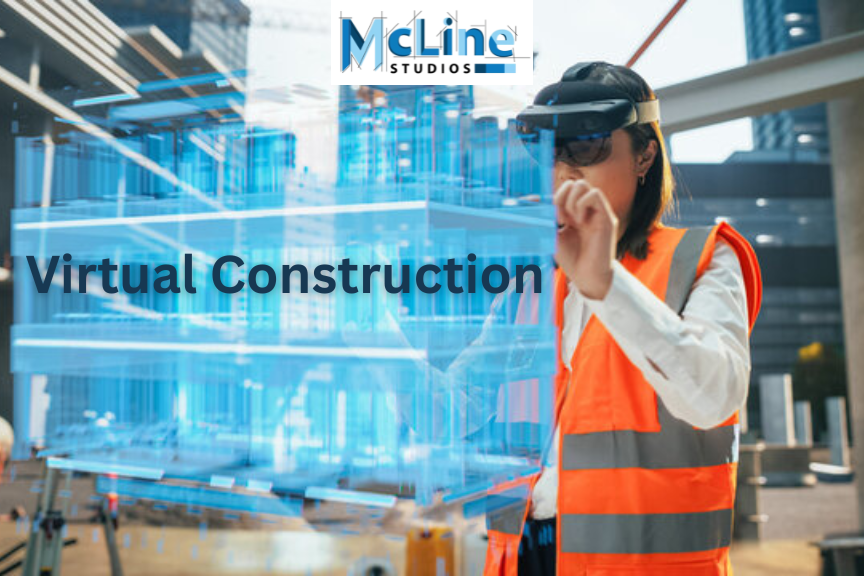
Virtual Construction refers to the planning, coordination, and modeling of construction processes using virtual construction models and data prior to actual construction activities being carried out. This enables all construction processes to be viewed in relation to the entire construction project in the virtual construction environment created.
While traditional construction methods tend to leverage mainly 2D drawings and reactive problem-solving, Virtual Construction is all about proactive decision-making. As a result, construction teams can identify possible challenges and resolve them in the virtual world instead of dealing with them during the construction phase.
Essentially, Virtual Construction refers to the construction of a project twice; once virtually and then physically.
The Role of Virtual Design and Construction in Modern Projects
Virtual design and construction is a methodology that involves the integration of multidisciplinary design models with construction planning and execution strategies. This constitutes the core of Virtual Construction as it integrates architectural, structural, and MEP designs within a unified digital environment.
Virtual Design and Construction enables the following project stakeholders to:
- Model complex building systems
- Coordinate trades before construction begins
- Validate constructability
- Coordinate schedules, budgets, and logistics
Proper implementation of virtual design and construction prevents silos from being created, and it ensures that all project stakeholders develop a common understanding. Collaborative design is a core element of effective Virtual Construction processes.
Reasons why Virtual Construction is Becoming Indispensable
The need to be more efficient, accurate, and accountable has made Virtual Construction a necessity and no longer a choice. This was due to some of the problems brought about by traditional methods of construction.
Some of the main reasons why Virtual Construction is important include:
- Increasing project complexity
- Tight construction schedules
- Cost/Budget Constraints
- Better coordination among different trades
- Requirement of Less Rework and Waste
Teams can therefore change their focus from solving problems to planning by embracing Virtual Construction. There will be a higher predictability of projects by teams and individuals through Virtual Construction.
How Virtual Construction Helps Project Planning
One of the major benefits that Virtual Construction offers is the effect it has on the accuracy of planning. Instead of planning based on assumptions, planning can now be carried out virtually.
By Virtual Construction, one can:
- Construction sequencing analysis
- Identify constraints on access and staging
- Optimize material flow
- Plan Crane Placement and Site Logistics
- Coordinate construction timetables with design milestones
But the level of foresight here enables teams to make appropriate decisions in good time, resulting in no delays when the decisions are implemented.
Improving Coordination via Virtual Construction
Coordination is an ever-existing problem in the construction industry, especially in projects that require more than one discipline. Virtual Construction enhances coordination by incorporating all building systems within a digital environment.
With virtual design and construction, conflicts in architectural, structural, and MEP systems can be analyzed and corrected before they go on site, ensuring fewer problems during execution.
In Virtual Construction, all parties have the same starting point, called the source of the truth, which enhances communication and accountability in the project.
Eliminating Errors and Rework through Virtual Construction
Defects and rework are some of the costliest problems found in the construction process. Virtual Construction greatly decreases difficulties because it spots errors early on in the digital process.
Through simulation of construction activities, it is possible to:
- Identify design inconsistencies
- Solve spatial conflicts
- Validating installation sequences
- Integrate compliance with standards and regulations within
This leads to less RFIs, less change orders issued, and an optimized construction process in general. Virtual Construction moves problem-solving out of the construction field and into the virtual construction site where it is quicker and less expensive to solve.
Construction Costs and Virtual Construction
Cost certainty is a concern that takes precedence in the minds of owners as well as contractors. It is facilitated by Virtual Construction to provide accurate cost planning by associating costs with models, schedules, and purchasing strategies.
By using virtual design and construction, the following can be done:
- Produce accurate quantity take-offs
- Determine the forecasted material requirements
- BUDGETS AND CONSTRUCTION PHASES
- Minimize Unplanned Expenses
Since Virtual Construction makes planning and coordination easier, it reduces risks of financial loss due to changes and errors during construction and designing.
Schedule Support Using Virtual Construction Tools
Even the best-funded projects can be derailed by delays. Virtual Construction enables better schedule reliability through the use of virtual construction sequences that enable teams to virtually analyze construction sequences.
Through the integration of scheduling data with models, Virtual Construction makes possible the following:
- Construction time simulation
- Identification of critical path risks
- Optimization of trade sequencing
- Enhanced Milestone Planning
This has the effect of ensuring alignment between construction works and the projected time frames to minimize the risk of time overruns.
Virtual Construction in MEP Coordination-Hearth padding-
The MEP systems are the most complicated and coordination intensive aspects of the building. Virtual Construction has an important task to accomplish related to the fitting and functionality of the MEP systems.
By the use of virtual design and construction techniques, the MEP system can be coordinated with the architectural and structural system in order to ensure that:
- Clash-free routing
- Clearances, proper
- Effective installation procedures
- Space Optimization
- Optimization of Space
Such a level of coordination is critical for achieving the successful and timely delivery of high-performance buildings.
Enhancing Safety through Virtual Construction
Safety planning is another field in which Virtual Construction offers major benefits. Thus, construction activities can be anticipated and possible dangers prevented before construction staff are even onsite.
- BIM and building information modeling
- Safer Construction Sequencing
- High Risk Activities Identification
- Provisioning, Temporary Construction, and Access
- Enhancing site logistics
This pro-active approach improves overall safety on the site and minimizes the risks of accidents.
Collaboration and Communication in Virtual Construction
Collaboration is at the heart of all successful projects in the construction industry. Collaboration is encouraged in Virtual Construction through a digital platform that brings all project stakeholders to share information.
With virtual design and construction tools, architects, engineers, contractors, and owners can:
- Evaluate cooperative models
- Work together to resolve problems
- Act on knowledge to make informed decisions quickly
- Ensure all actions remain transparent
This collaborative atmosphere is great for fostering partnerships and success.
The Long-Term Worth of Virtual Construction
The applications of Virtual Construction do not end there. The digital models created during Virtual Design and Construction can be applied to facility management, renovation, and future expansions.
Long-term benefits:
- Accurate as-built documentation
- Enhanced maintenance planning
- Easy renovation and upgrading
- Enhanced asset management
By offering dependable data that supports all levels of the building life cycle, Virtual Construction retains enhanced value.
Why Companies are Investing in Virtual Construction
Due to the rising competitiveness and decreasing profit margins, firms are opting for investment in Virtual Construction to derive a competitive advantage. Those firms that opt for virtual design and construction are well-equipped to deliver projects efficiently and effectively.
Virtual Construction offers several benefits to companies, including:
- Increase project predictability
- Mitigate risk and rework
- Improve Client Satisfaction
- Improve operational efficiency
Its advantages ensure Virtual Construction is a fundamental piece of contemporary construction methods.
The Future of Virtual Construction
The future of construction is rapidly becoming digital, with Virtual Construction being a continually evolving area in response to new technologies. It will be further developed through interfacing with technologies such as automation, analytics, and modeling.
The increasing integration of virtual design and construction is likely to redefine the implementation process of projects. It is expected to create a possible future standard.
Conclusion
Virtual Construction is changing the landscape of the construction sector by allowing for smarter planning and more predictable outcomes. The concept of virtual design and construction combines various technologies to allow project teams to easily identify problems, reduce risk, and deliver projects of a higher quality.
With the relocation of problem-solving from the construction site to the virtual setting, Virtual Construction gives teams the power to construct with clarity and control. As the industry grows from strength to strength, the adoption of Virtual Construction is no longer a consideration but the only essential element of successful construction.