

Why Casework Shop Drawings Are Essential for Custom Interior Projects?
Step into any luxury hotel lobby, high-end corporate office, or custom-designed modern home, and the first thing that catches your eye is the seamless integration of built-in features. From sweeping reception desks and geometric wall panels to perfectly fitted built-in shelving, custom woodwork defines a space’s character. In the world of premium interior design, these bespoke installations are the elements that transform an ordinary room into an extraordinary experience.
However, there is a massive difference between a beautiful concept sketch and a physical, structural asset that fits flawlessly into a built-in alcove. For architectural woodwork to look as flawless in reality as it does on a rendering, designers and fabricators must rely on a highly specialized blueprint. Enter shop drawings, the definitive visual bridge that translates a creative vision into exact, manufacturing-ready reality.
The Core Blueprint: Understanding Casework vs. Millwork Shop Drawings
Before diving into why these structural plans are so critical for your next project, it helps to clear up a common point of confusion within American construction circles: casework vs millwork shop drawings. While the terms are frequently thrown around interchangeably on construction sites, they refer to two distinct types of storage and wood features.
- Millwork: This refers to custom, built-to-order architectural assets that are fabricated to fit a specific wall or room profile. Think of specialized wall paneling, crown molding, and ornate, one-of-a-kind reception spaces.
- Casework: This refers to the manufacture of box-like storage structures, such as standard shelving units, storage cases, and cabinetry.
When a project manager demands architectural millwork shop drawings, they are looking for comprehensive submittals that map out exactly how both casework (the boxes) and millwork (the custom trims and paneling finishes) will interact with the building’s existing rough dimensions.
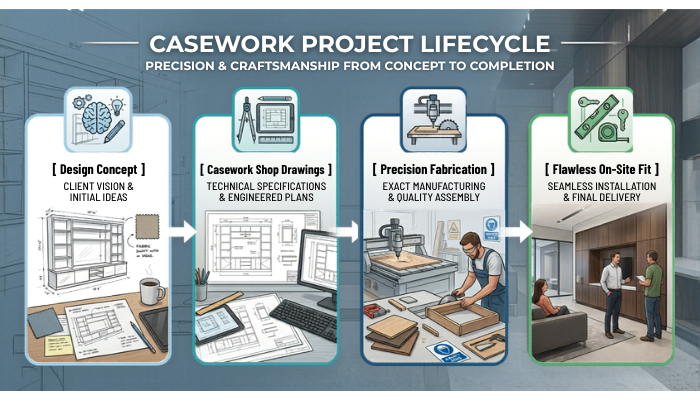
Elevating Cabinet Design from Concept to Production
A stunning cabinet design sketch is a fantastic tool for aligning with a client on style, color palettes, and overall aesthetics. However, a design sketch rarely tells a cabinet maker what thickness of plywood to use, where the hidden structural hardware will be anchored, or how much clearance a door needs to swing open without hitting an adjacent trim.
This is exactly why detailed layouts are the unsung hero of custom kitchen cabinet design. When dealing with premium materials and high-end residential spaces, guesswork is an expensive luxury. High-quality shop blueprints take a loose concept and enrich it with critical manufacturing data, answering the technical questions long before anyone picks up a saw:
- Material Callouts: Specifying core materials (MDF, Baltic birch, particleboard) and finish types (wood veneer, plastic laminate, custom paint).
- Hardware Clearances: Mapping out soft-close drawer slides, European hinges, integrated LED lighting tracks, and handles.
- Assembly Details: Illustrating the explicit woodworking joints (dados, dowels, pocket screws, or mortise-and-tenon) that ensure the structure can withstand years of daily use.
By mastering how to design custom cabinets through the lens of detailed shop documentation, draftspersons eliminate miscommunication between the design studio and the fabrication floor.
The Practical Benefits of Comprehensive Construction Documentation
In the United States, space optimization is a massive selling point for residential layouts, especially when configuring complex layouts like custom walk-in closet organizers. To achieve that high-end, flush aesthetic, the fabrication documents must account for real-world irregularities.
Rarely is a building’s drywall perfectly plumb, and floors are notoriously uneven. Shop submittals protect the integrity of the design through three essential pillars:
1. Accurate Field Verifications
Shop drawings incorporate actual field dimensions rather than theoretical architectural dimensions. This allows draftspersons to incorporate “scribe pieces”, extra fractions of an inch of material on the outer edges of the cabinetry, that the installer can shave down on-site to create an airtight fit against warped walls.
2. Coordination of Trade Interferences
Custom woodwork does not exist in a vacuum. A kitchen island needs to house plumbing lines, an entertainment center must route complex AV wiring, and commercial office desks require integrated electrical conduits. Comprehensive shop submittals map out these integration points explicitly, preventing catastrophic clashes with plumbers and electricians during final installation.
3. Client Sign-Off and Risk Mitigation
For a custom fabricator, these drawings serve as a legally binding contract of what is being built. When a client or general contractor signs off on a set of shop submittals, they are approving the exact dimensions, grain directions, hardware locations, and materials. This clear communication dramatically reduces the risk of costly teardowns and reworks.
Why Every Professional Project Relies on Specialized Drafting
If you walk into a custom fabrication shop or search online for commercial cabinet makers, you will quickly realize that the most successful businesses are not the ones with the loudest tools; they are the ones with the tightest construction documentation.
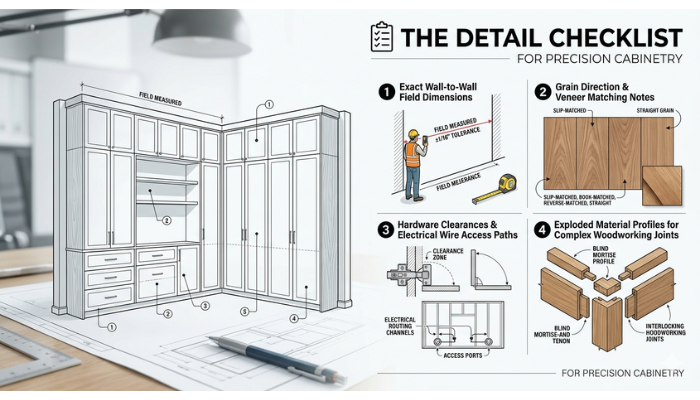
The meticulous precision of architectural drafting ensures that every single variable is accounted for. For instance, when designing custom modular storage units for a medical clinic or hotel suite, the drawings outline everything from edge banding thickness to internal shelf support routing. This level of granular clarity allows multi-million dollar interior projects to move smoothly through manufacturing lines with zero downtime or confusion.
Conclusion: Turning Imagination into Architecture
Ultimately, custom interior installations are an investment in a property’s value, functionality, and visual identity. Whether you are an architect aiming to preserve design intent, a contractor managing strict on-site timelines, or a homeowner investing in custom cabinets, high-end woodwork requires more than just raw craftsmanship; it demands exceptional technical planning.
By investing in professional, clear, and comprehensive casework shop submittals, you remove the element of surprise from the building process. The result? A stress-free construction lifecycle, minimized material waste, optimized trade coordination, and an interior environment that stands as a flawless testament to great design.