Case Study: 2D To 3D Rendering for a Residential Project
Overview
When Icon Building Group approached McLine Studios, the vision for the home was already clearly defined bold, modern, and confident. What the project needed next was a way to experience that vision visually, long before construction would begin.
The goal was simple but critical:
Transform architectural elevations into a realistic exterior rendering that reflected every material decision and design intent with clarity.
Establishing the Design Direction
The residence was designed with a strong contemporary character anchored in traditional residential proportions. From the beginning, the client specified a dark, cohesive exterior palette supported by clean architectural detailing.
Key exterior requirements included:
- Black stucco facade
- Metal awnings to enhance depth and shading
- Architectural asphalt shingles for the primary roof
- Metal roof accents above dormers and selected roof areas
- Consideration for future solar panel integration
- Black exterior and interior windows with black grilles
- A prominent front entry featuring either:
- A double door with 3 by 4 glass lites, or
- A single door with two side panels
Every element needed to work together – visually and proportionally – without overpowering the residential scale of the home.
Transforming Elevations into a 3D Form
Using the architectural drawings and elevation references, our team began by carefully modeling the home’s massing and proportions. Symmetry, roof pitches, dormer placement, and entry volumes were developed with precision to ensure the structure felt balanced and grounded.
As the model took shape, special attention was given to how the dark stucco exterior would read under natural daylight. Dark façades demand precision – without careful lighting and texture control, details can disappear. Our focus was to preserve depth, shadow, and surface variation while maintaining a clean, modern appearance.
Lighting, Context, and Realism
To keep the rendering grounded and believable, the home was placed within a calm suburban setting. Landscaping, lawn areas, and a clear pedestrian approach were added to provide scale and context without distracting from the architecture.
Natural daylight lighting was used intentionally – allowing the textures of stucco, metal, and roofing to read clearly, while maintaining a realistic, lived-in atmosphere. The result was an image that felt approachable, not over-stylized.
Refinement Through Coordination
As architectural considerations continued – including future solar panel integration and roof detailing – the visualization was refined alongside the design process. This ensured the final image remained flexible, accurate, and aligned with the project’s long-term intent.
Every adjustment was made with one question in mind:
“Does this still reflect what will be built?”
The Final Visualization
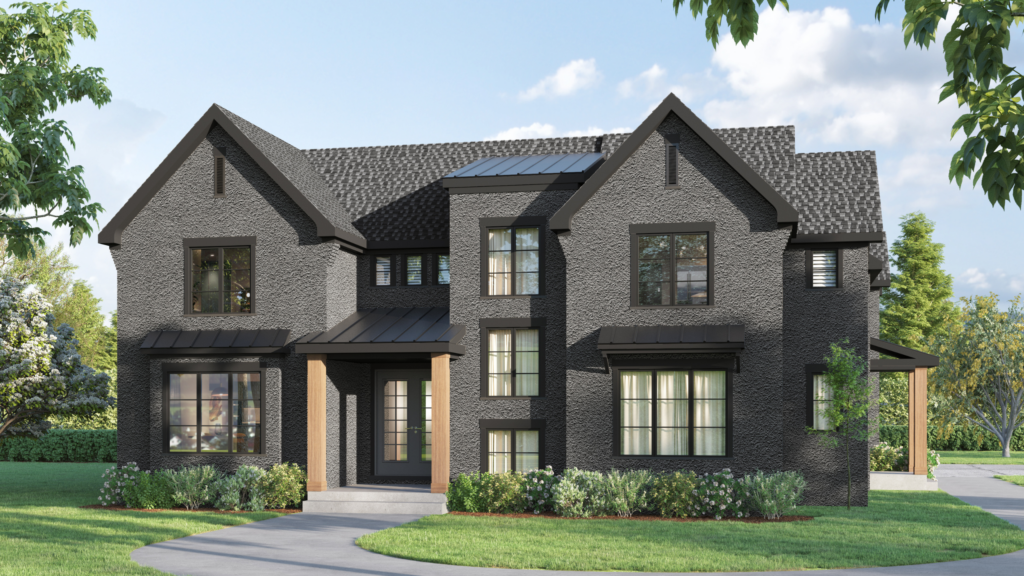
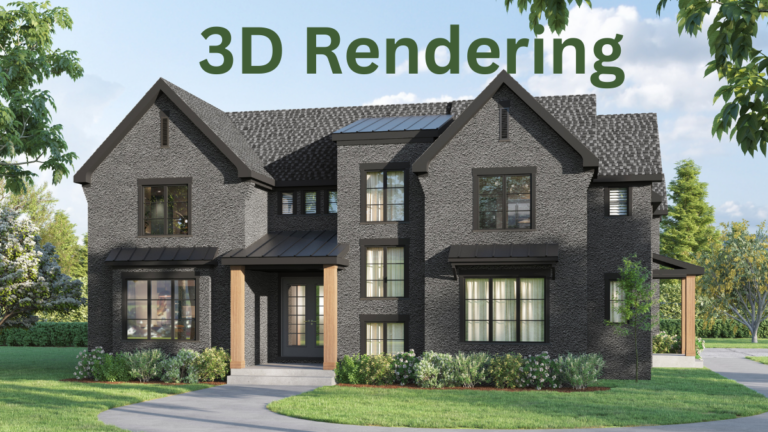
The completed exterior rendering delivered a clear, photorealistic representation of the home exactly as envisioned. The image successfully communicated material choices, roof complexity, window detailing, and overall architectural character in a single, cohesive visual.
More than an image, it became a decision-making and presentation tool – allowing the client to move forward with confidence.
Project Impact
- Accurate translation of elevation requirements into a realistic exterior render
- Clear visualization of black stucco, metal awnings, roofing systems, and window detailing
- A presentation-ready image aligned with current and future design considerations
Strengthened collaboration through visual clarity
Seeing the Design Before It’s Built
This project highlights McLine Studios’ approach to architectural visualization – respecting design intent, honoring material accuracy, and creating visuals that help clients see their projects with confidence before construction begins.
Our Work Samples