
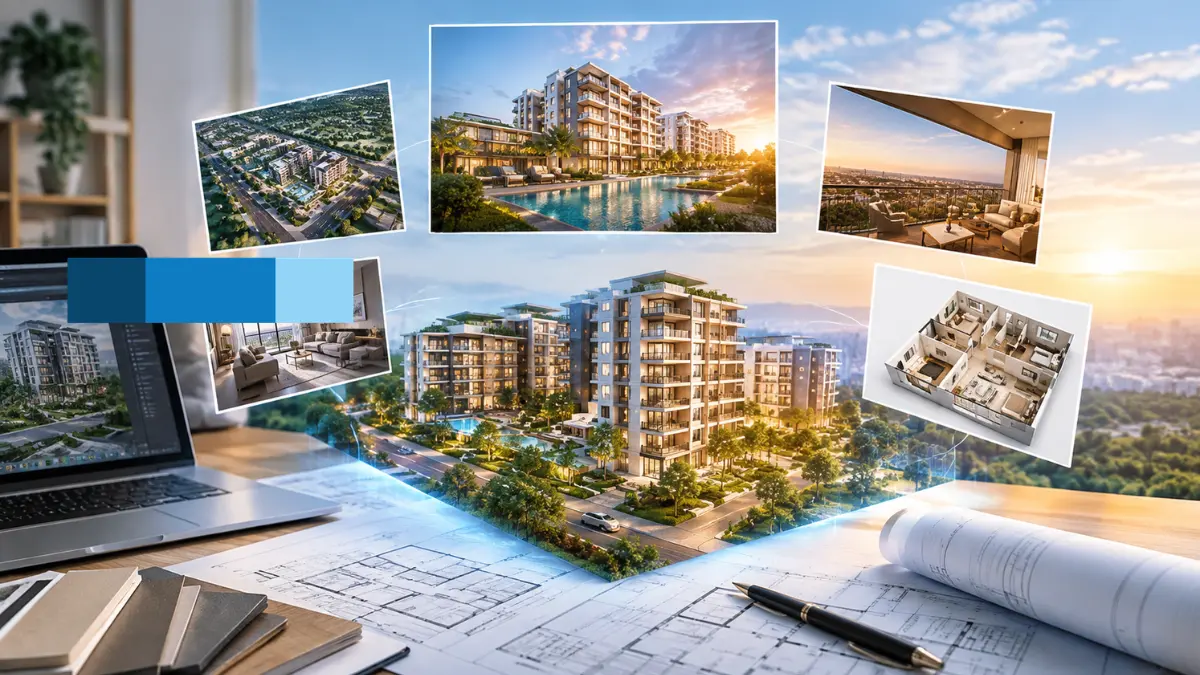
In development, marketing a project that does not exist creates multiple challenges. It requires trust from a consumer to purchase, lease, or invest in something that is intangible. For projects to gain that trust, images that tell a story must be created. These images are known as real estate renderings and are utilized during the marketing of a project prior to its construction (pre-construction marketing) or a project that is yet to be built (pre-launch real estate marketing). It is rare to find marketing professionals in the real estate industry questioning the need to commission such renderings.
The challenge is deciding which images to commission. From a marketing standpoint, it is ideal to construct a comprehensive image package before construction of a project begins. The goal of such a package is to address potential consumer questions about the project, in a logical order. It is the goal of both the developer and the marketing team to provide information most pertinent to the sale. This guide provides insight into the use of real estate rendering services, as well as other graphics, to achieve those goals.
Why View Planning Matters in Pre-Launch Real Estate Marketing
Marketers often showcase renders to the property team to get feedback and sign-off. This can lead to performance-based selection of renders, resulting in suboptimal selection of renders for a project. Instead, selection of renders should be focused on how best to communicate the marketing message to the target market. Having discipline during the pre-construction rendering phase can improve the quality of the final product.
Buyers Need More Than One Perspective
There are many elements of a property that a buyer must evaluate. The exterior appearance, the interior layout, the site, the surroundings, the features and benefits, and many more. If the listing fails to touch on many of these areas, there are gaps in information, and gaps in information lead to delays in making an offer.
Every View Should Answer a Buyer Question
Planning should be straightforward. For each view, identify the buyer question and the answer provided by the marketing material.
- Hero view of exterior: “What will this building look like?” It establishes project identity.
- A view from above: Where is the project in the larger setting, and what is the project in the larger scheme of things?
- Key interior View: What will it be like to be in space?
- Amenity view: What else do I get?
- Floor plan view: Will it work for me?
Answering a question that is not clearly articulated should result in the removal of the view from the project.
Start With the Pre-Launch Marketing Goal Before Choosing Views
The goals of the campaign will ultimately inform what views are used. Defining the goals up-front lets us develop a strategy to inform the package.
If the Goal Is Building Awareness
The views you submit should include a hero image, an aerial or context view, and a signature view of the architecture. Use your submitted views for marketing and public relations materials and on our website.
If the Goal Is Generating Buyer Interest
Add multiple dimensions. Showcase sample interior rooms, views, and surrounding area compositions to help clients visualize living in your community.
If the Goal Is Pre-Sales or Pre-Leasing
Prospects now need specifics. Prioritize unit interiors, amenities, floor plans, exterior identity, and site context. This is where real estate rendering for pre-sales most directly supports conversion.
If the Goal Is Investor Communication
Investors evaluate several factors when evaluating a potential opportunity. These include the extent of the opportunity, how it is positioned, and its potential to generate a financial return.
The Essential Real Estate Rendering Views for a Pre-Launch Campaign
Most campaigns draw from the same core set of real estate rendering views. Not every project needs all seven, but each answers a distinct question.
1. Hero Exterior Rendering
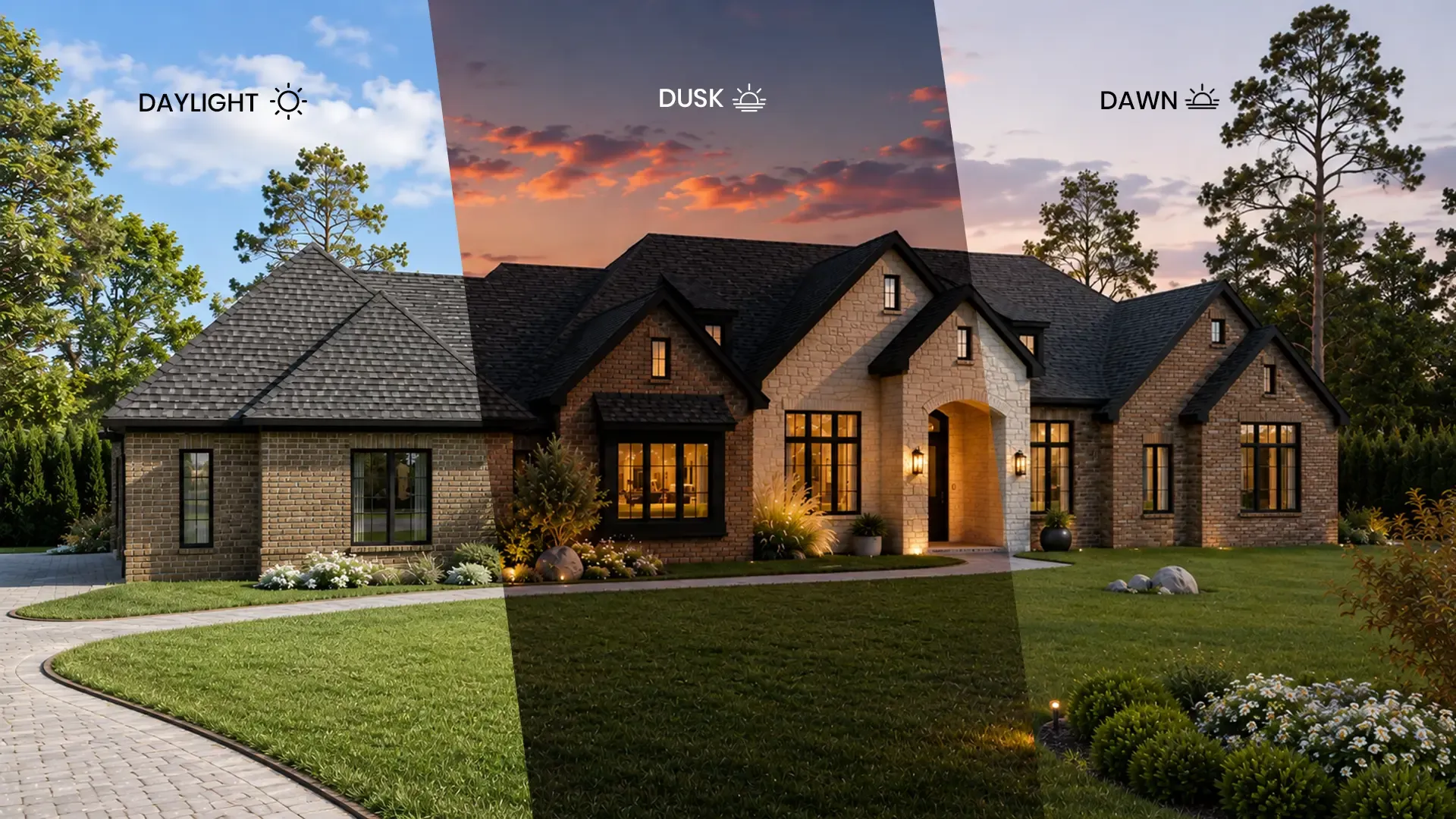
The hero exterior rendering is undoubtedly the most important image in the project. As the key image in marketing collateral (the website, brochures, display material, etc.) and investment presentations, the hero exterior rendering warrants the most thought in terms of material and finishing elements, and composition. For development teams interested in evaluating how various exterior renderings are created, including 3D exterior rendering services, this would give development teams a strong basis for evaluating what an exterior rendering package could look like.
2. Street-Level Exterior View
A street-level rendering illustrates the project as it will be experienced by the average person using the street. This type of sketch shows building access and describes retail opportunities. These renderings help illustrate and define a project more completely than other types of exterior views.
3. Aerial or Bird’s-Eye View
An aerial real estate rendering view of a property shows many elements that help locate and scale the site. Like other types of architectural renderings, these images are valuable marketing tools. As someone involved in the planning of a property, you may want to look into the availability of aerial 3D rendering services to better understand site planning and the services available for visual site representation.
4. Key Interior Rendering
A 3D interior rendering showcases the spaces within a property and presents potential buyers’ living situations. If the property is a multi-unit commercial building, the rendering may illustrate living spaces, kitchens, and bedrooms. For single-unit buildings, renderings may illustrate offices, boardrooms, or other hospitality areas. Successful real estate interior renderings showcase spaces that assist in the buyer’s decision-making process and may not illustrate every single room. 3D interior rendering services assist in showing various viewpoints and scenarios of interior spaces.
5. Amenity and Lifestyle Views
Amenity rendering shows potential clients various lifestyle opportunities outside of the unit, such as the Clubhouse, Pool, Fitness Center, and other areas around the property. Effectively used by developers to showcase differentiating amenities in a crowded market.
6. 3D Floor Plan or Unit View
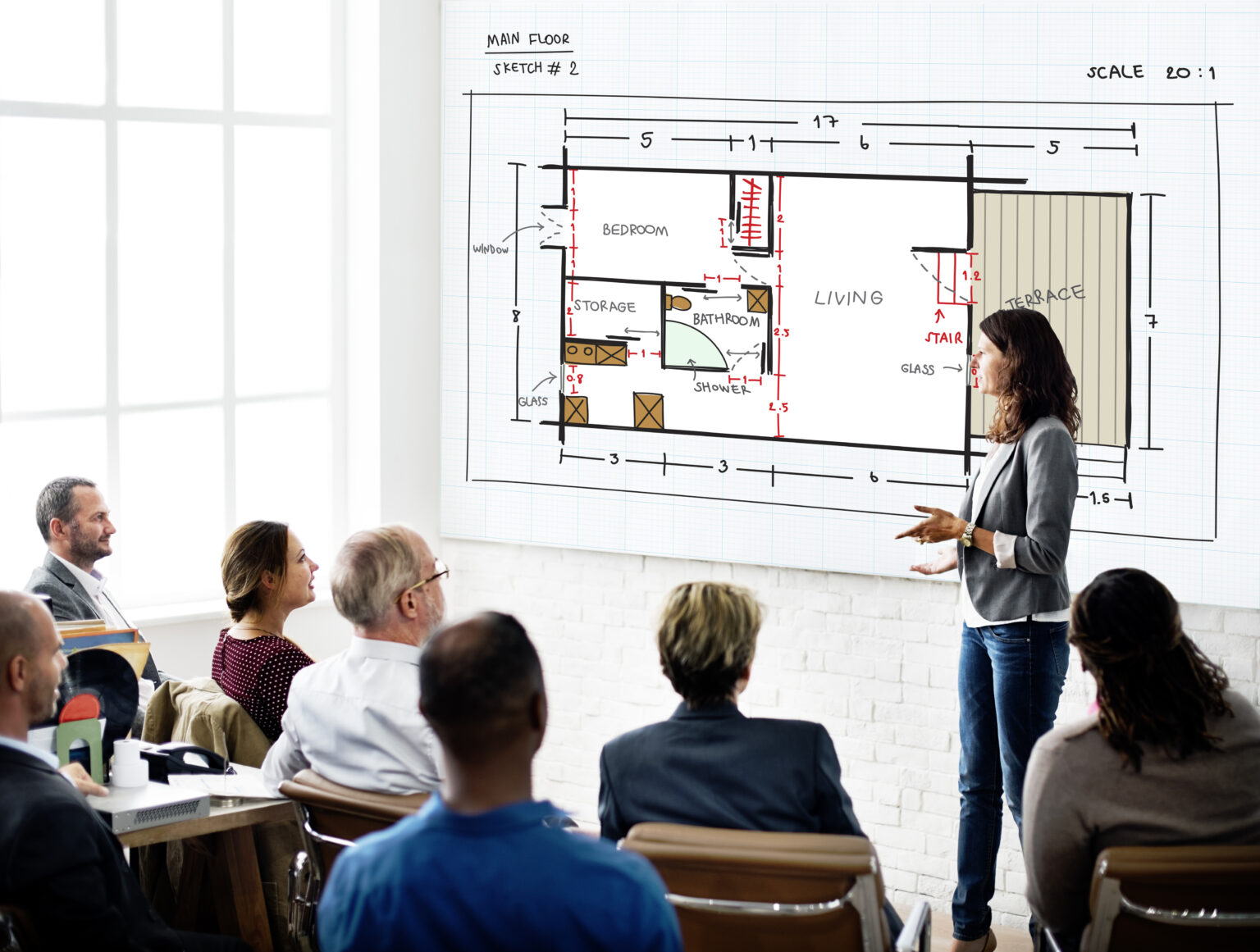
A 3D floor plan rendering provides the end-user with a complete understanding of the functionality of the space. With the inclusion of key elements of furnishings and finishes, 3D floor plans provide a fuller understanding of spaces than do traditional 2D plans.
7. Site Context / Master Plan View
Site context renderings and master plan renderings help illustrate a development’s relationship to its environment and adjacent properties, including land uses, public and private access ways, and circulation. These renderings are essential when describing phased or master-planned developments.
How to Decide Which Views Your Project Actually Needs
Using a five-factor framework to categorize ideas based on a project, rather than using a generic example.
1. Property Type
Each property type focuses on specific areas of emphasis:
- Multifamily: all elements of the exterior and interior, floor plans, and on-site amenities.
- Mixed-use: street-level views and surrounding context, retail spaces, interior residential, and aerial views.
- Single-family: exterior and all interior spaces, site and surrounding context.
- Hospitality: all spaces, including public and guest rooms.
- Commercial: all spaces, and sign/tenant identities.
These are broad generalizations, and elements of each will vary.
2. Buyer or Stakeholder
Each of these individuals- retail buyer, institutional investor, prospective tenant, broker, and salesperson needs different information. You need to know who is deciding which view to take.
3. Project Scale
A small infill building doesn’t require much imagery. A master-planned development, on the other hand, requires site-level views, phase views, and typical building views, to name a few.
4. Marketing Channels
Materials used across multiple channels (e.g., website, social media, brochures, signage, etc.) require different formats. Each time you create a new format, consider the implications for that particular channel.
5. Launch Timeline
Allot sufficient time for modeling, camera approvals, script editing, and final production. Increased time pressures decrease alternatives and increase the chance of an unfavorable result.
Allow time for modeling, camera approvals, revisions, and final production. Compressed schedules reduce options and increase risk, particularly when approvals are slow.
How to Build a Real Estate Rendering Shot List
A real estate shot list, or 3D rendering shot list, outlines the strategy for a client project. The shot list consists of six repeatable elements.
1. Identify the Marketing Objective
The goal of the project may be to introduce the development (create awareness), generate interest (buyer interest), capture pre-sales/pre-leasing, or raise capital (investor communication).
2. Identify the Items to be Illustrated
These may include the architectural elements of the development, key amenities, sample floor plans, and/or other competitive differentiators of the site.
3. Identify the Views
Associate each item with the view in which it will be illustrated. It is permissible for an item to be illustrated in more than one view.
4. Eliminate Redundant Items
If more than one view demonstrates the same item, retain the view which most effectively communicates the item, and eliminate the remaining view.
5. Identify Marketing Channels
Associate each view with the channel of distribution to which it will be directed, and determine the appropriate aspect ratio and orientation of the view.
6. Finalize the Inputs
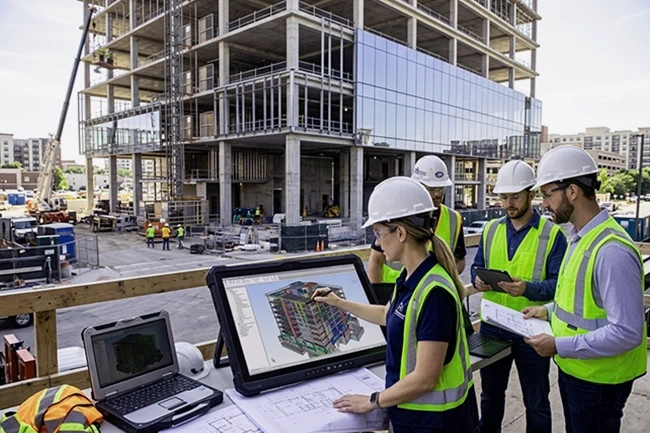
Confirm the availability of digital files from the client, which may include CAD, Revit, BIM, plans, elevations, sections, materials, and other pertinent data. Where the client does not have the required digital data, CAD Rendering Services may assist with the processing and/or integration of the data to ensure a comprehensive and accurate representation of the site.
How Many Real Estate Rendering Views Should You Plan?
No number perfectly encompasses a project, and providers who claim to know the exact number without context should not be trusted. Several factors should be considered when determining the scope of a real estate rendering package, including the project size and type, the marketer’s objective, the means at the marketer’s disposal, the level of complexity, and the budget and time available.
It is easier to consider the types of views required and the number of each type of view required to fulfill the marketer’s objective. In general, most projects require the following views:
- Core views: to include at least one exterior view and at least one interior view.
- Supporting views: to include, for example, other interiors, exteriors, and views of potential uses and/or other activities.
- Conversion views: to include interiors and floor plans of potential uses.
- Context views: to include site and/or master plans.
When considering views required to fulfill the marketer’s objective, the shot list should determine the final number.
Plan Rendering Views Around the Final Marketing Assets
How a real estate asset looks on a website differs from how it looks in a printed brochure or advertisement. In real estate marketing, rendering means visualizing a final asset before it is physically created.
Website and Landing Pages
To capture the most impact with a website or landing page design, Marketers should use horizontally-oriented large images. When using this technique, it is important to have a subject or focal point of the image to help with responsive cropping.
Social and Digital Marketing
When marketing on social and digital platforms, using a more vertical image composition is best.
Other Media
Print requires a different approach than other marketing collateral because it requires a higher-clarity image with good negative space, and sufficient information so that important details are not obscured by typography.
Marketing for Investors
Relying on marketing images to tell a story is not recommended. When marketing to investors, images should support and reinforce an idea or concept presented by a marketer.
Prior to delivering marketing images to a client, it is best practice to ensure a full understanding of the image usage to capture the most value from the final renderings.
What to Provide Your Rendering Team Before Production
A complete brief shortens timelines and reduces revisions. Gather the following before kickoff:
- Architectural plans, elevations, and sections.
- CAD, Revit, or BIM files.
- Material specifications and furniture references.
- Landscape plans, site photographs, and site information.
- Preferred camera locations.
- Required view count and output dimensions.
- Intended marketing channels.
- Launch deadline and revision expectations.
A Practical Pre-Launch Real Estate Rendering Checklist
You can take the help of this table to organize your planning before briefing a studio.
| Planning Item | What to Define |
| What is being marketed | Property type, scale, phase |
| Audience | Buyers, tenants, investors, brokers |
| What must be understood | Key features and selling points |
| Essential views | Core, supporting, conversion, context |
| Channels | Web, social, print, presentations |
| Available files | CAD, Revit, BIM, plans, photos |
| Required number of views | Based on the shot list |
| Deadline | Launch date and approval windows |
| Revisions | Rounds and approval process |
| Output formats | Resolution, dimensions, file types |
Why McLine Studios for Real Estate Rendering
McLine Studios provides visualization services from an AEC perspective. The team works with various design software and extracts models at various levels of detail. Therefore, the visuals created by McLine are an accurate representation of the intended design. McLine provides visualizations of the interior and exterior of a design, and also provides user-requested views (e.g., context and aerial views). Unlike many visualization firms, McLine offers views based on specific marketing needs. For more information on how services benefit property teams, see McLine’s 3D rendering services for real estate developers.
Final Takeaway: Plan the Views Before You Produce the Renders
The quality of a pre-launch real estate rendering package isn’t tied to the quantity of images included. Each image should be created to strategically achieve a communication or marketing goal. There are standard questions for each image: what is the objective, who is the audience, what are the features, from what vantage points are the images created, on what communication channels are the images used, and what is the shot list. Prioritize answering these questions, and the images will help achieve marketing objectives.
Frequently Asked Questions
Real estate rendering shows the design of a property that is not built yet, to help buyers and tenants make purchase or lease decisions and investors make investment decisions
The packages may differ, however, depending on the project; packages may include at least a front view of the exterior, a street view, a view of the surroundings, plans of the interior and the site, and a view of the site in relation to the surrounding area.
This depends on the size of the project, the unit types, the types of amenities, the ways the renders are published, and the marketing goals.
Exterior renders depict the property’s relationship with the surroundings, while interior renders show the property’s finishes and design.
Yes, these renders show the property’s location, site access, and spatial relationships, which may be helpful for large property investments.
As the design of the property is stabilized. Ideally, marketing renders should be prepared prior to launch of the property.
Yes. Property designs may vary; however, a model may be designed to show multiple views of the property.