


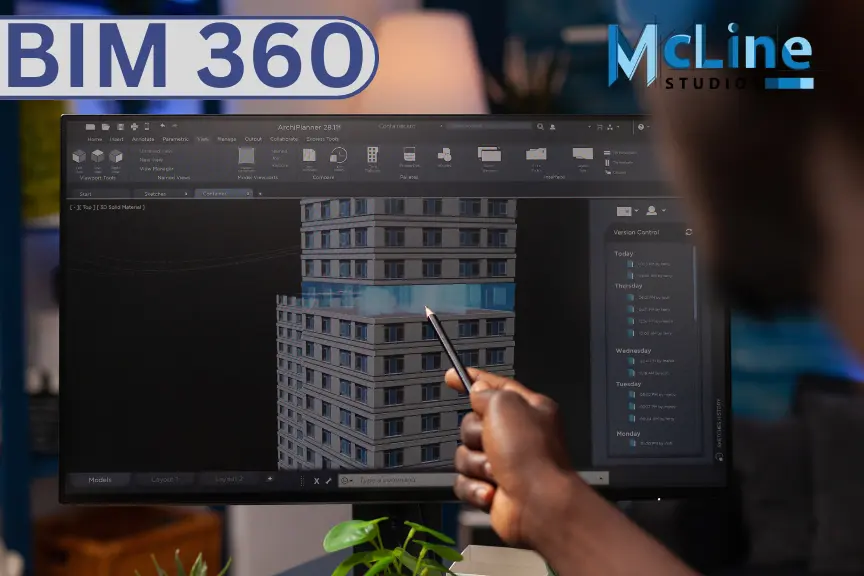
In today’s fast-paced AEC (Architecture, Engineering, and Construction) industry, projects are no longer defined by drawings alone. They are driven by data, collaboration, and real-time decision-making. This is where BIM has emerged as a game-changing platform.
BIM is not just a project management tool—it is a cloud-based ecosystem that connects people, workflows, and information throughout the entire construction lifecycle.
What Is BIM 360?
BIM 360 is Autodesk’s cloud-based construction management platform designed to improve project visibility, coordination, and execution from design through construction and handover.
It allows project teams—including architects, engineers, contractors, and owners—to collaborate on a single source of truth, reducing errors, delays, and costly rework.
At its core,360 enables:
- Centralized document management
- Real-time collaboration
- Model coordination and clash detection
- Quality and safety tracking
- Data-driven decision-making
Why BIM Matters in Modern Construction
Traditional construction workflows rely heavily on fragmented communication, outdated drawings, and manual coordination. BIM eliminates these inefficiencies by bringing everyone onto one connected platform.
Key Industry Challenges BIM 360 Solves
- Version control issues
- Design clashes discovered too late
- Poor site-to-office communication
- Delayed approvals and RFIs
- Limited project transparency
By addressing these challenges, BIM significantly improves project outcomes, cost control, and timeline predictability.
Core Features of BIM 360
1. Document Management
BIM 360 provides a centralized, cloud-based document repository where all project files—drawings, models, specifications, and reports—are stored and accessed in real time.
Benefits:
- Always work on the latest version
- Automated version tracking
- Controlled access and permissions
2. Design Collaboration
With BIM Design, teams can collaborate on Revit models in real time, regardless of location.
Benefits:
- Simultaneous model authoring
- Reduced design conflicts
- Faster design iterations
This is especially valuable for large, multi-disciplinary projects.
3. Model Coordination
BIM 360 enables seamless model aggregation and clash detection, allowing teams to identify and resolve issues before construction begins.
Benefits:
- Early clash identification
- Reduced RFIs
- Improved constructability
4. Construction Management
From the job site to the office, BIM keeps everyone aligned with tools for:
- RFIs
- Submittals
- Daily reports
- Issue tracking
Field teams can update information directly from mobile devices, ensuring real-time project visibility.
5. Quality & Safety Management
BIM supports proactive quality and safety processes through:
Digital checklists
Issue tracking
Audit workflows
This helps teams reduce risk, improve compliance, and maintain high construction standards.
Benefits of Using BIM 360
| Improved Collaboration | BIM 360 breaks down silos by connecting all stakeholders on a single platform, fostering transparency and accountability. |
| Reduced Errors & Rework | By identifying clashes early and maintaining accurate documentation, BIM 360 significantly cuts down costly rework. |
| Faster Decision-Making | With real-time data and insights, project managers can make informed decisions without delays. |
| Better Cost & Schedule Control | Improved coordination leads to fewer delays, better planning, and stronger cost control. |
| Scalable for Any Project Size | From small commercial builds to complex infrastructure projects, BIM 360 scales to meet project demands. |
BIM 360 vs Traditional Project Management
| Traditional Methods | BIM 360 |
|---|---|
| Email-based coordination | Centralized cloud collaboration |
| Manual clash detection | Automated model coordination |
| Paper-based reporting | Real-time digital workflows |
| Limited visibility | Full project transparency |
Conclusion
BIM is no longer optional for forward-thinking AEC firms. It is a strategic necessity for delivering projects that are faster, smarter, and more collaborative.
By enabling real-time collaboration, reducing risk, and improving visibility across the project lifecycle, BIM empowers teams to build with confidence—every step of the way.